Safety Matters – April 2026
 The H&S Dept
Disturbing asbestos
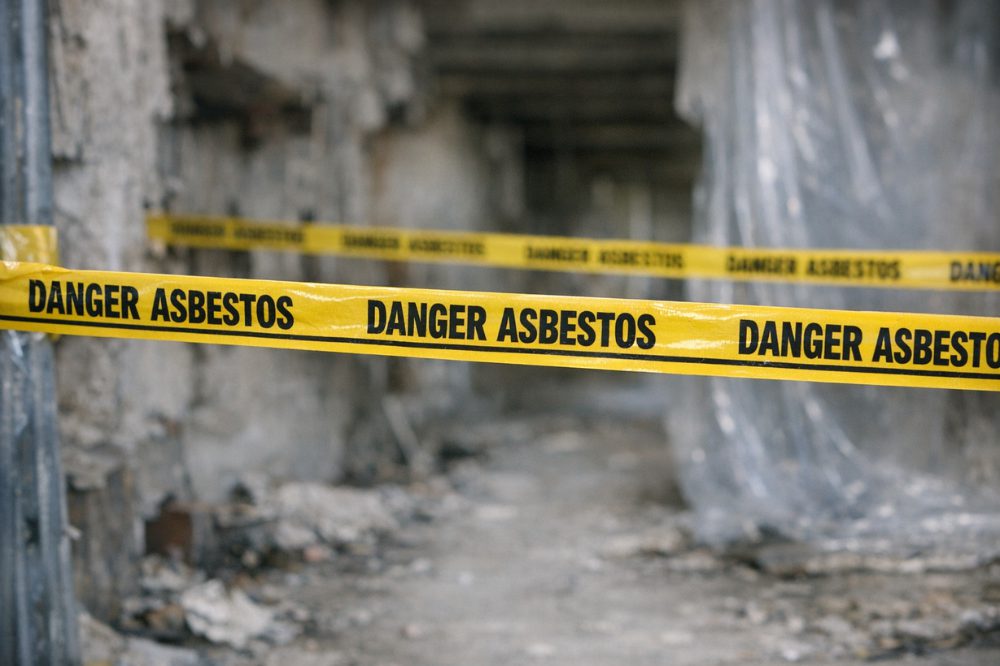
From 1st to 7th April, it was Global Asbestos Awareness Week. This is not just one for construction and the trades, although if you work in these sectors, you’ll probably already know that you are more at risk. Anyone who manages or has responsibility for maintenance/repair of non-domestic premises (the duty holder) should have awareness.
Asbestos fibres, when inhaled, are a deadly carcinogen. They cause cancers like mesothelioma (a cancer of the lung and stomach linings) and lung cancer, as well as other diseases. These can take years or even decades to develop and are often then incurable leading to death.
Asbestos was used extensively in the UK for its insulation and fire‑resistant properties, particularly from the 1950s to the 1980s. The importation, supply and use of asbestos were progressively prohibited, with the remaining forms (including chrysotile/ “white asbestos”) banned in 1999. Asbestos-containing materials in existing buildings are not necessarily dangerous if they are in good condition and left undisturbed, but they must be properly identified and managed.
So, if you are responsible for a building that was constructed or renovated in the decades prior to 1999, or a tradesperson working in such buildings this should be front of mind. Works can still be carried out, but if you suspect asbestos is present it needs to be dealt with according to regulations – starting with determining if works can be completed in a manner without disturbing asbestos.
Many tasks which disturb asbestos are required to be completed by an HSE-licensed contractor who will know how to work with, and dispose of, asbestos safely. Consider also, that buildings will degrade over time and materials which were once stable and safe may become an issue.
A staggering 5,000 people die every year from past asbestos exposure, dwarfing other reported health and safety fatalities. Whether you are in a trade or are responsible for a building, and you want to ensure you are set up to manage asbestos safely, please get in touch with us.
Sound thinking
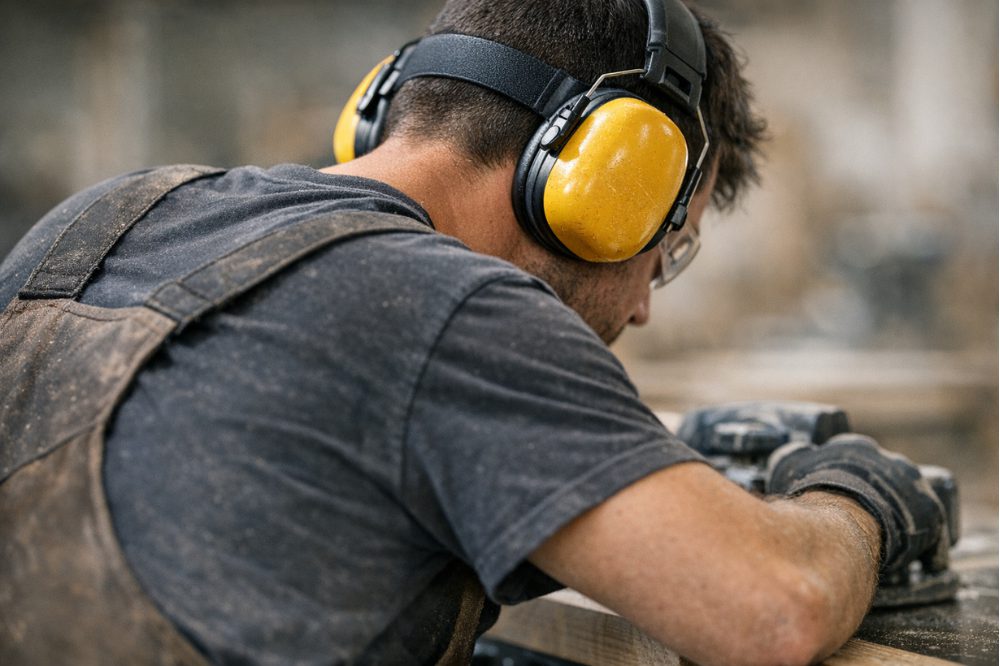
If you have attended a gig or two in your time, it may come as no surprise that about six out of ten workers and performers in the live music industry say they experience permanent tinnitus. This sounds like a major risk that is not being managed, and indeed in the same survey (of 1,200 people) eight out of ten people said that they receive no training on hearing safety.
The risk from noise is by no means limited to the music industry. Many construction, manufacturing and other roles expose employees to occasional or persistent loud noise which can damage hearing, and employers have a duty to eliminate or reduce noise exposure so far as is reasonably practicable.
The Control of Noise at Work Regulations 2005 are what govern this and if certain decibel levels are reached you must find ways to reduce the noise or failing that provide adequate protection. If you think you have a noise problem at your workplace and would like help addressing it, give us a call.
Ladder safety
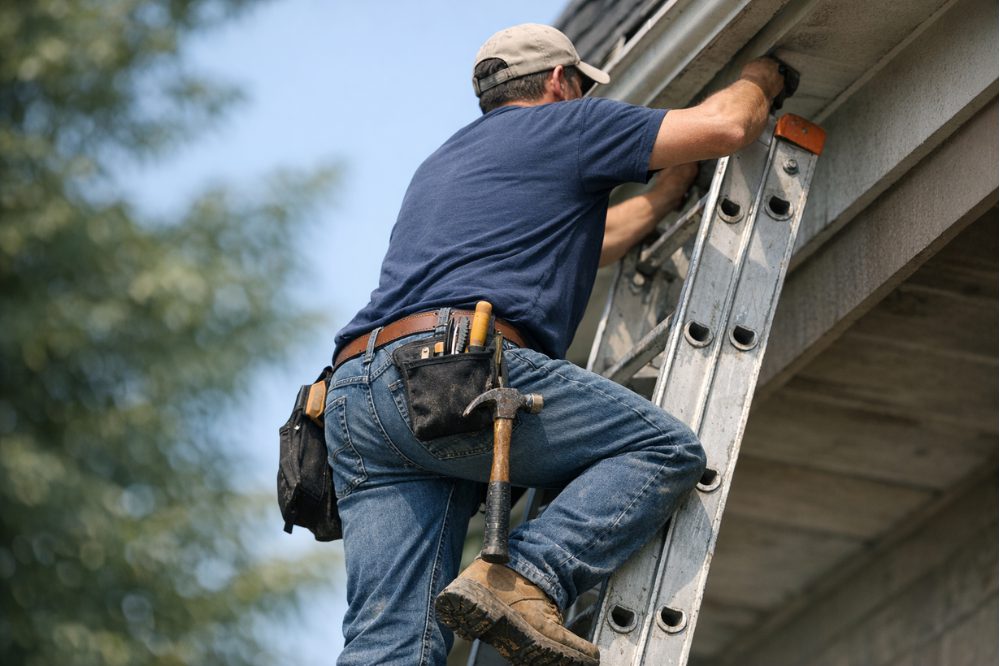
In the board game snakes and ladders, the ladder is a one-way route upwards; it’s only if you encounter a snake that you take an unwanted descent.
This couldn’t be further from the reality. Fortunately, snakes are not a general hazard in the UK. But ladders pose a serious risk of harm when used incorrectly.
The starting point when you are considering a ladder should be determining whether there is a safer alternative during a risk assessment for the work to be carried out.
It may be that there is no realistic alternative or the risk is low because, say the ladder will only be required for a short time. The Health and Safety Executive (HSE) points out that task duration should not be the deciding factor (it is the overall risk that’s most important). Guidance advises that ladders are generally for short-duration, low-risk work (often taken as around 30 minutes or less), but duration alone shouldn’t be the deciding factor—the overall risk is what matters most.
So, what if you go through that process and conclude that a ladder is the best way to proceed? Well, the next step is to ensure that only competent people use the ladder, or for trainees that they are under supervision of a competent person. Competence can be achieved through a blend of experience and training as well as practical and theoretical knowledge.
With this you’ll know how to choose the right ladder, check and maintain it, set it up correctly and use it safely.
Falls from height are consistently the leading cause of workplace fatality and the fifth most common cause of workplace injury. Such incidents will not always involve a ladder, but it is an area where, if taken seriously, major safety improvements can be achieved.
Earlier in the year, a contractor was prosecuted and penalised to the tune of nearly £30,000 in fines and costs after a worker sustained life-changing injuries when falling just 1.65 metres from a ladder. Failures cited by the HSE included uncontrolled use of ladders and not putting a safe system of work in place, alongside wider shortcomings including inadequate edge protection.
We share information about ladder training in an article below and can help with wider consultancy on working from height if you want to bring in outside expertise.
Keeping seasonal and temporary workers safe

Summer, like the festive season, can be a prime time for hiring seasonal or temporary workers.
In fact, there are many names for such workers, but one way or another their health and safety has to be accounted for. They could be hired directly and on short-term contracts, through temping agencies, via digital platforms or very casually (gig economy workers). Some might be self-employed.
As we move towards summer and attention turns to such recruitment, it’s important to remember health and safety. Generally, the end user business (of the labour) will have primary responsibility for health and safety – in other words the workplace where people are carrying out the work.
If employment businesses, like temping agencies, are involved, they have a duty to liaise with the end user business. This will involve identifying hazards and agreeing actions for the end user business to complete to keep employees safe. They’ll need to understand the worker’s duties and that they have the skills and experience to perform them safely.
RIDDOR (Reporting of Injuries, Diseases and Dangerous Occurrences Regulations) may apply regardless of whether workers are permanent, temporary, agency or self‑employed. The duty to report sits with the “responsible person” (typically the employer and/or the person in control of the work or premises). In labour supply arrangements, the host and the agency should be clear who will make reports and how information will be shared.
Self-employed workers have responsibility for their own health and safety and the safety of their work on others.
In practice, it can be a grey area, and the kind of thing where responsibility can fall between two stools if not thought about. So, if you want guidance for such seasonal workers, please get in touch.
Our eLearning of the month

In every newsletter we shine a light on one or two relevant eLearning courses. And given some of the topics we have already focused on in the articles above, it was an easy decision this month to choose our excellent Asbestos Awareness Training and Ladder Safety Training.
Asbestos Awareness is a basic training course that over 30 minutes provides anyone with a starting knowledge of asbestos. This does not qualify you to work with asbestos, but it will help you or your team, understand the dangers, learn to recognise where asbestos might be present and therefore when to call in an HSE-licensed contractor.
Ladder Safety is a 25-minute course split into four sections. These include ladder selection, ladder pre-check, ladder set up and ladder use. Together they provide you with an array of knowledge which you can use to complement the experience you build up to demonstrate competency in this area. A ladder is involved in one third of incidents. Make sure you are protected.
Our eLearning course are paid for by credits: one per person per course. You can find out more information and check out our full range of eLearning courses here. Or if you would prefer, just call us.


