Safety Matters – February 2025
 The H&S Dept
Tragedy when you don’t learn from a near miss
At the start of the year, a Multi Academy Trust (MAT) was fined £300,000 plus costs after a 19-year old student (in sixth form at one of their schools) with the condition Pica died following a “series of management failures”.
Pica is a condition where the person affected has a compulsion to eat things which have no nutritional value. In January 2023, the student was unsupervised (contrary to his risk assessment) and choked on paper towels he had consumed whilst alone, tragically dying later.
Just days before this tragedy, the same student had consumed and choked on paper towels in the playground but had managed to clear his airways himself. Unfortunately this near-miss was not acted upon.
The Health and Safety Executive (HSE) concluded that the school had not ensured that all safety risks associated with Pica had been identified nor had measures been successfully put in place to protect the student and prevent harm, such as training and supervision by staff.
Thinking beyond this sad case, by law businesses are required to report certain workplace injuries, near-misses and cases of work-related disease to the HSE. This duty is known as RIDDOR (Reporting of Injuries, Diseases and Dangerous Occurrences Regulations).
Separately, if you have more than 10 employees, it is necessary, under The Social Security (Claims and Payments) Regulations 1979, to keep an accident book. Recording incidents allows your business to better identify patterns of accidents and injuries and will help you evaluate and address the risks.
There may be other systems or processes you could follow which are not specifically prescribed by law, but which work well for your business.
Here at The Health & Safety Dept we can help your business if there have been any near misses. And you can rest assured that we are also specialists in school health and safety if this is your area needing support.
We are experts in ensuring any accident is thoroughly investigated following the relevant laws. We take an impartial, evidence-based approach which will give you actionable solutions, to help prevent further incidents occurring.
Our team of professionals will guide you through all aspects of accident investigations. Whether it is simply advice needed, full accident investigations or help reporting to RIDDOR, we are your one-stop-shop. Contact us today if you need support at any stage.
Better late than never
Many of us will have been glued to the latest series of The Traitors on the BBC this new year, but did you pick up on an apparent health and safety mishap during one episode mid-series?
Initially pairs of contestants took it in turns to choose other players they believed to be undeserving of a protective shield to have “gunk” poured over them. However there was a switch after a few rounds, from the sludge being poured directly over their heads (so it subsequently dripped into their eyes and mouths), to the mixture only being poured over the backs of their heads so it ran down their backs.
We can only assume that a health and safety professional stepped in. Whilst risk assessments for your business should be correct before commencing any activities, this episode of The Traitors was a timely reminder that if you notice something isn’t right, you have a duty to react and adjust as needed to keep everyone safe.
Remember, a ”faithful” employer will protect their staff and business when it comes to health and safety matters, so don’t be a ‘traitor’.
AI opportunities for health and safety

It’s difficult to get away from AI chat these days, as it’s constantly making headlines (for both positive and not-so-positive reasons). Undoubtedly AI will become part of every business (and business function) eventually, and health and safety is no exception.
Indeed, it may well be on your radar that Sir Keir Starmer announced an AI Opportunities Action Plan in January. The plan aims to boost growth and provide more efficient services within the UK.
Elsewhere, TfL has launched its own experimental AI technology, designed to keep passengers safe on station platforms. Currently in a trial phase, the AI programme reviews CCTV footage on the DLR to identify and detect objects (other than trains) on the tracks, with the aim of reducing accidents and fatalities on the rails.
As an SME why not get ahead of the pack and start to think about how AI could help your health and safety in the workplace. It could be an opportunity to help save a life as well as time and money for your business. A winning combination.
The HAVS and HAVS nots
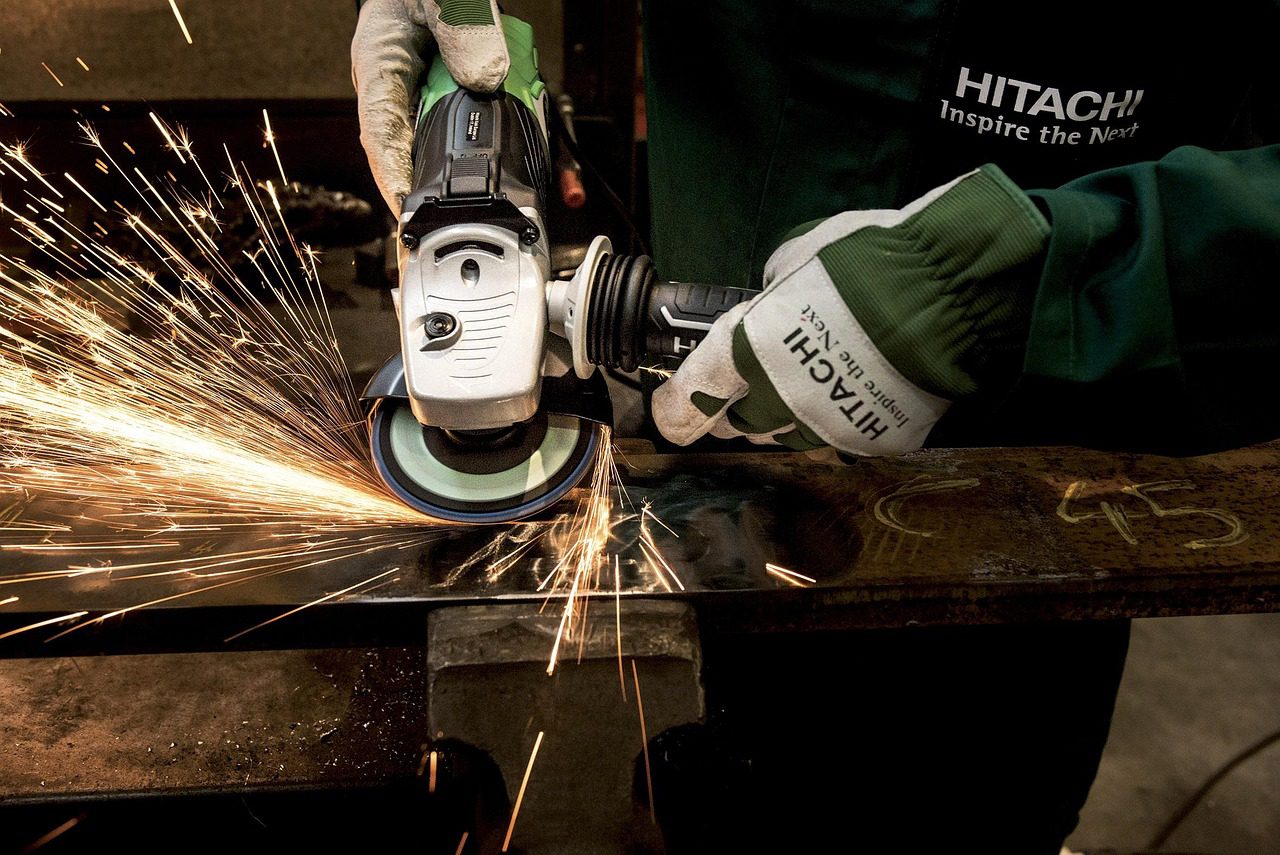
Since 2005, the Control of Vibration at Work Regulations has been enforced to help protect workers from Hand Arm Vibration Syndrome (HAVS). HAVS occurs when vibration is transmitted through work processes (such as the use of power tools) to the hands and arms of workers.
HAVS becomes hazardous through frequent exposure to vibrations, which can lead to permanent health issues. By identifying symptoms of HAVS, employers can take steps to prevent permanent damage to workers.
In the last quarter of 2024, the HSE successfully prosecuted a borough council after they fell significantly short of the Health and Safety at Work etc Act 1974 (HSAWA) in the years following one of its workers being diagnosed with HAVS. This was due to repeated exposure during his 20+ years of using vibration tools whilst working for the road maintenance department. The council was fined £60,000 plus costs.
Employers have a legal duty to report cases of HAVS to the HSE. In this instance, the worker was diagnosed as having HAVS in 2005 but continued to work with vibrating tools for 14 more years.
Despite the worker being under an occupational health surveillance since diagnosis, the HSE investigation uncovered that the recommendations had not been implemented accurately or consistently over the 14 years.
It was evident that the calculations for vibration exposure were undervalued within the council. Coupled with workers being encouraged to work with the vibrating tools through a bonus scheme and overtime offer, they would have exceeded their Exposure Limit Value (ELV), thus worsening their condition.
Ultimately, poor assessment, monitoring and action led to this prosecution, not to mention the lasting impact on the health and safety of the employee. Make sure your business is compliant with all aspects of the law and keeping your staff safe. Give us a call today if this is something your workplace needs support with.
eLearning of the month: Cyber Security Awareness Training

This February 11th was Safer Internet Day, this year with the tag line “Too good to be true?” promoting keeping yourself and others safe from online scams. With about half of UK businesses suffering at least one data breach a year, it is important to do what you can to help stop any cyberattacks from happening in your workplace.
Here at the Health & Safety Dept we are Cyber Essentials Certified, so we are perfectly placed to teach you and your staff about cyber security. Our 35 minute eLearning Cyber Security Awareness Training, has been designed to be accessible to all and help keep your business safe.
With cyber-crime costing UK businesses tens of billions of pounds each year, this course ensures users are equipped with practical tools to help protect your business’s data, computers and networks from any unauthorised access.
Our course is CPD accredited and users will receive a printable cyber awareness certificate once successfully completed. For more information and a full list of our accredited training courses, contact us today.


